PFAS removal from water
IDRECO’s Experience Serving Water Quality
For over 50 years, IDRECO has been developing advanced solutions for water treatment. This extensive experience is now at the core of the approach chosen to address one of today’s most pressing environmental challenges: the removal of PFAS (per- and polyfluoroalkyl substances).
Research, Testing and Validation
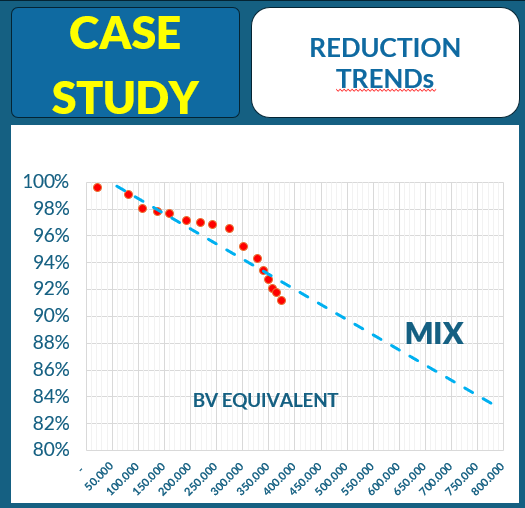
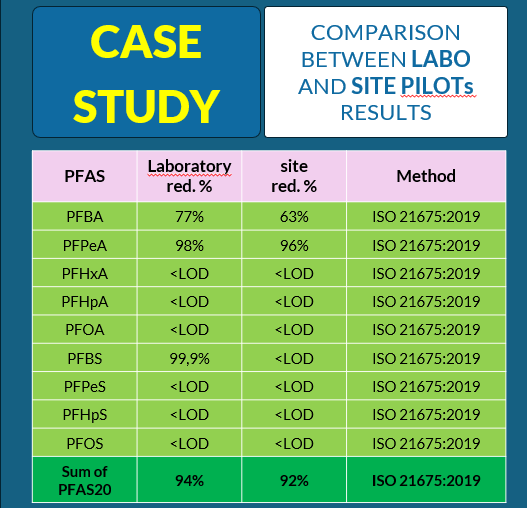
The technologies have been optimized through extensive testing in IDRECO’s laboratories and validated by field trials.
Through plug-in pilot units, both the effectiveness of the process and the accuracy of IDRECO’s design predictions have been confirmed under real operating conditions.
The Selected Solution
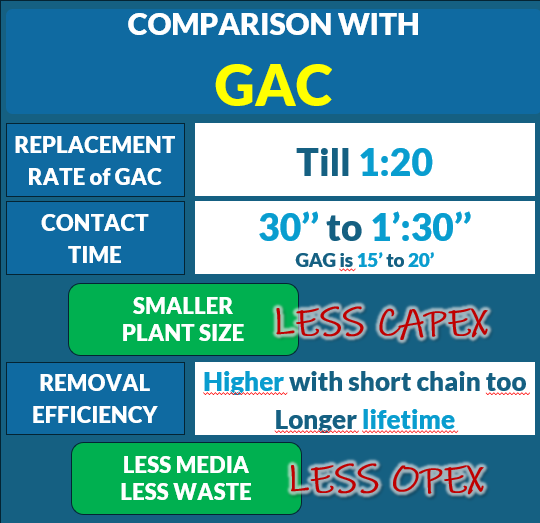
The system is based on a next-generation adsorbent media, specifically designed for PFAS capture. Compared to traditional methods such as activated carbon or ion exchange resins, this solution provides tangible benefits:
- Higher adsorption efficiency: increased PFAS removal percentage.
- Longer media life: consistent performance over time with fewer replacements.
- High flow capacity: ability to treat larger volumes while reducing the overall footprint of the plant.
Applications
The adopted technology is flexible and can be applied to various contexts:
- Drinking water – ensuring safety and compliance with the strictest regulations.
- Wastewater – reducing environmental impact and supporting sustainable industrial processes.
The plants can be installed as standalone systems or integrated into more complex treatment lines, ensuring high performance in every operating scenario.
Integration with Other Systems
Such plants can operate independently or in synergy with activated carbon systems. In this configuration, the selective removal of PFAS reduces the load on the carbon, improving the overall efficiency of the treatment and extending the lifetime of the filter media.
IDRECO’s Proposal
To enable clients to independently verify the effectiveness of the solution, IDRECO offers the rental and on-site installation of pilot or full-scale units, according to the required flow rates. This opportunity allows the system’s performance to be assessed under the specific water conditions to be treated, providing concrete, measurable, and verifiable results.